


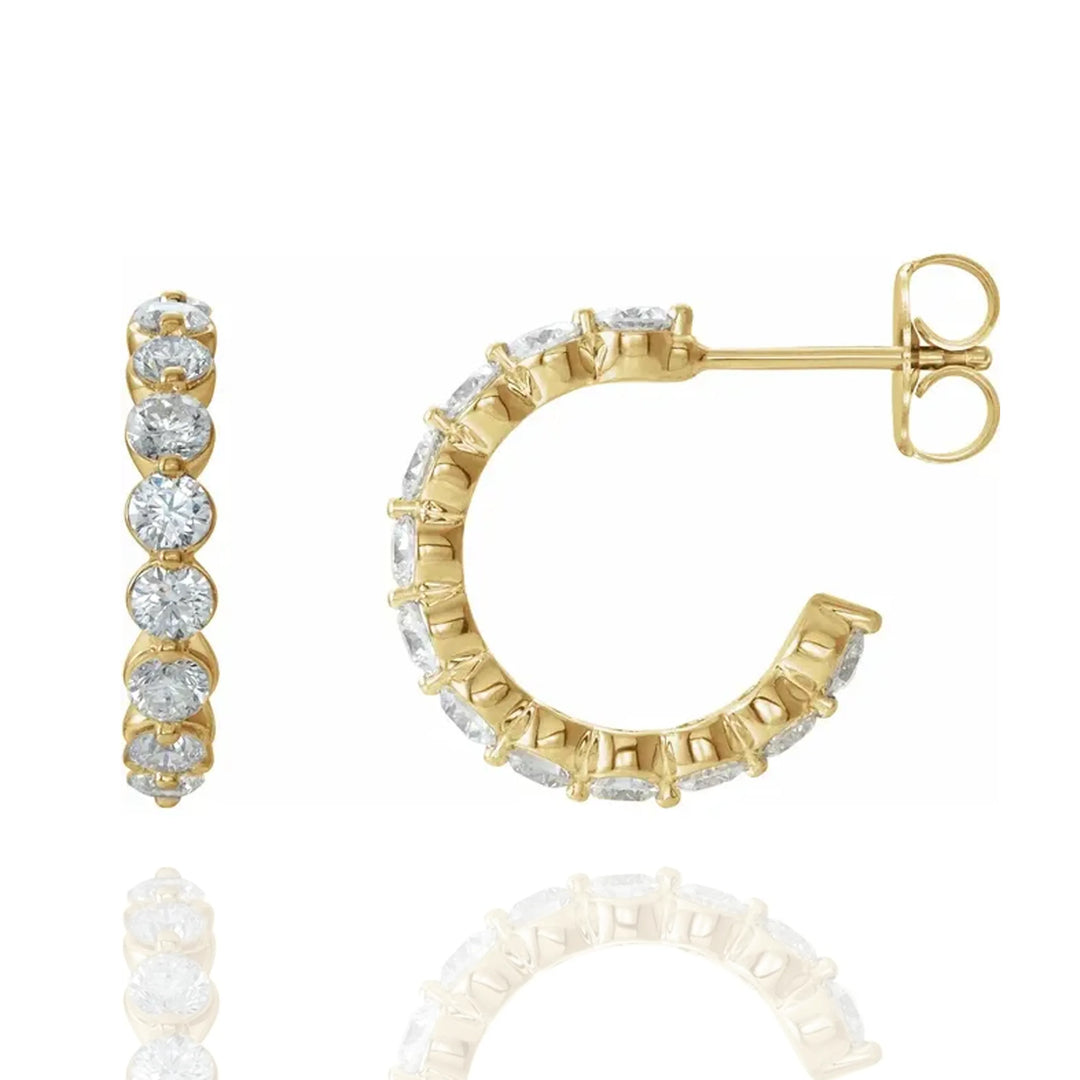


Diamonds have provided the beauty, the joy, the connection to the earth like no other gemstone can. The Diamond’s clarity, brilliance and lasting investment have made diamonds the desire of the heart of every man and woman throughout history, throughout the world. Today, the costs of Diamonds make it more difficult to purchase. A very close second gem worthy of considering is the Moissanite.
What is Moissanite?
It looks like a Diamond but is it? Is it worthwhile? Keep reading, we think you’ll be impressed with this lab grown gem that has a competing brilliance to the Diamond. Let’s start with the Diamond. Where does it come from and what makes a Diamond so sought after? Natural Diamonds come from deep within the Earth. Did you know Carbon (an element) is everywhere? Carbon becomes a Diamond deep within the earth’s mantle where the temperature is above 1000 degrees C. This intense heat causes the Carbon atoms to bond together. These bonds become unbreakable. When volcanic activity happens, these crystals are imbedded in the volcanic rocks that are spewed up to the earth’s surface. Diamonds have been found in many countries around the world and their value depends on the quality of the Diamond. Diamonds are on the Mohs Scale at 10 making them the hardest mineral on the planet. (For more interesting read on Diamond Mining check out Only Natural Diamonds.) Now let’s look at Moissanite. This naturally occurring stone was originally found in a meteorite deposit in a crater in the form of microscopic crystals in 1893 in Arizona by Ferdinand Henri Moissan. Moissan originally believed he found a Diamond. Unlike the purity of Carbon in a Diamond, Moissanite comes from the compound Silicon Carbon (SiC). The largest one ever found on Earth was just over 4mm. It is formed under immense heat and pressure combining the two elements. Not many meteors make craters here on Earth today. It is actually the rarest gem on earth. Because the Moissanite is so rare today it is now formed in a lab. Moissanite is no longer sourced from meteorites. To the untrained eye, the Moissanite and the Diamond look almost identical. Unbelievably, the Moissanite is said to have more fire or flashes of light than a Diamond because it has a higher refractive index. Stones are measured by hardness because the harder they are the more difficult to scratch. Moissanite is harder than Sapphires and Rubies. On the Mohs Scale the Moissanite ranks at 9.5 making it the second hardest mineral next to a Diamond. It is suitable for everyday wear. Like the Diamond, Moissanite has been used industrially since it’s discovery.